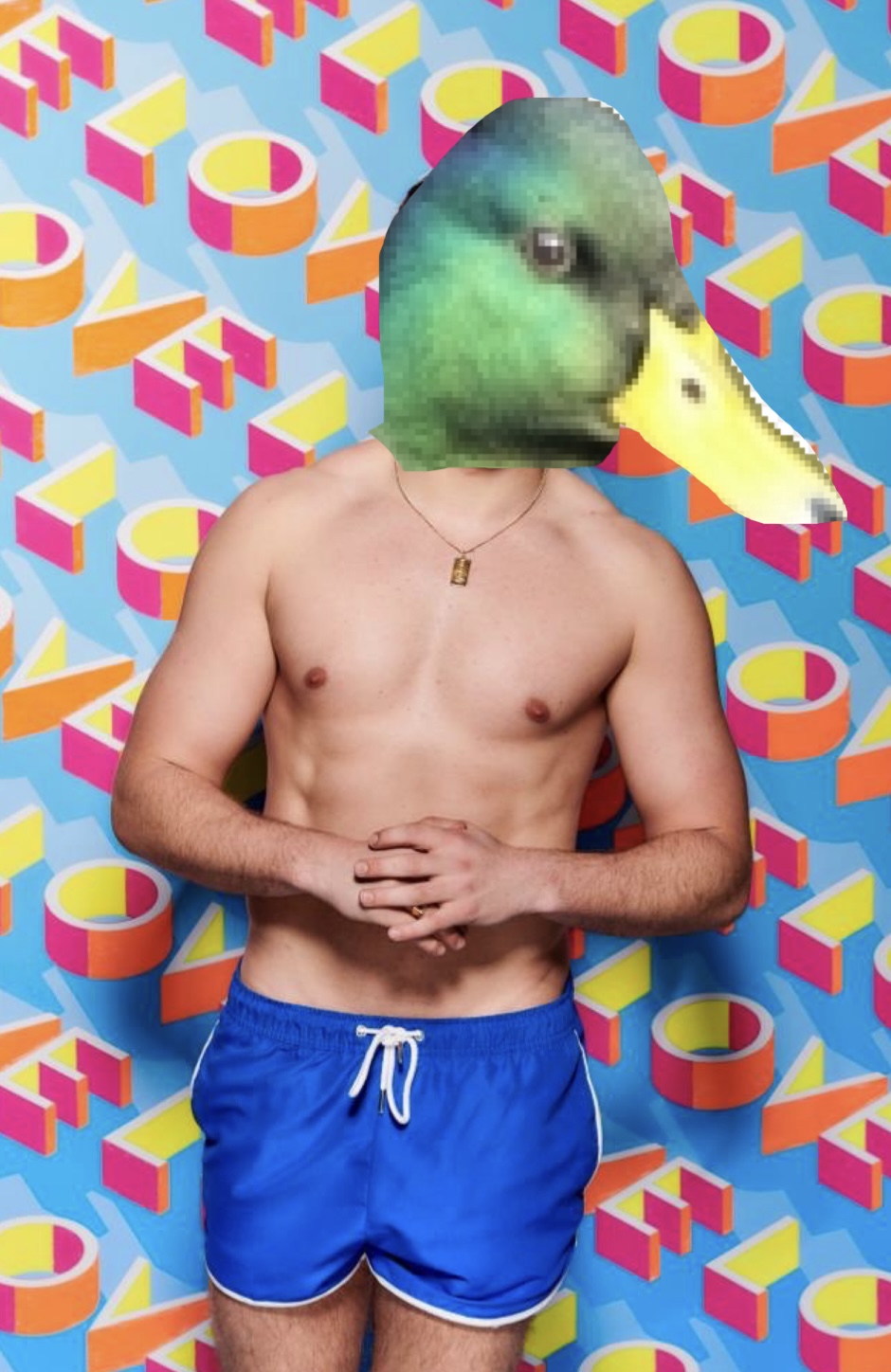
That time of year is upon us whereby you can segway from an hour of Springwatch to ITV2 for another hour of everyone’s hidden guilty pleasure: LOVE ISLAND. This isn’t high brow, Attenborough level content but it’s seemingly fascinating enough. The colourful courtship rituals of these so-called ‘influencers’ capture the attention of a nation for a whole summer but in the wider context of creatures on Earth, humans are quite dull. Birds on the other hand have a weird array of pulling techniques which got me thinking: which species of British bird would crack on with ease and who would be dumped from the island? There is no better group of animals to chirps their partners, trust me. It’s time for a metaphorical migration to Mallorca…
Inspired by Ye Olde 2020 Lockdown, a selection of bird-based blogs that may or may not blow your mind!
Monday, 6 June 2022
IF BIRDS WENT ON LOVE ISLAND…
Wednesday, 1 June 2022
ESPAÑA ESCAPADE
¡HOLA
Thursday, 12 May 2022
8 WAYS TO TRIGGER A BIRDER
Ornithologists are an eclectic bunch. Often passionate, most of the time knowledgeable and proud of their undermined hobby. It’s not everyone’s cup of tea and not everyone can tell a wigeon from a pigeon. People get it wrong from time to time but birders, being the picky bunch they are, will clench their fists at any vague biological inaccuracy. It comes from a place of wanting to spread knowledge but it can also come across as snotty and sensitive.
Got a bird nuts friend who you want to wind up? Or are you a bird nerd simply needing something to rile you up? Look no further, here is your to-do list in how to truly trigger any birder.
Incorrectly label them a twitcher
An absolute classic to get us started. There is always argey-bargey between self-confessed ‘elite’ birders who speed across country for one sighting versus those who go out for the wider experience of nature. If you fall in the latter category, your nose will turn up at being labelled a twitcher. Logically, this distaste doesn’t make much sense unless you disagree with a slightly more dedicated approach to birdwatching. A twitcher can still be a birder but not everyone goes on a wild red/breasted goose chase. It’s more the bundling of two tribes under one umbrella that causes discomfort. Like calling a Canadian American. So close yet so far.
Refer to bird ‘houses’
This one really shouldn’t touch a nerve but quite simply, it does. Trust me. In a birders mind, the wooden structure by which a bird builds its best must be referred to as a BOX, not a HOUSE. No windows, no doors and no central heating. These objects couldn’t be further from houses. If there’s one thing that gets a bird nerd’s goat, it’s the personification of wildlife. Animals must remain scientific objects and not anything with a personality or emotions. The notion of a bird rocking up to a house indicates they’ll soon pop their kettle on and watch TV. A box is a far more truthful depiction of the situation and even though a house can generally be described as somewhere in which someone lives, it’s still somehow wrong.
Feed bread to a duck
You’re lucky you don’t get birders snatching the bread out of your hands before shoving it down your throat. The environmentally friendly mantra which you’d think everyone knows by now is still lost on many and it seriously gets birdwatchers blood boiling. Bread is readily available at home and wildfowl clearly enjoy eating it. In that sense, where’s the harm? Well, imagine if someone gave you unlimited Nando’s for the rest of your life. Your eyes will most certainly be bigger than your belly. I don’t need to go over why feeding ducks bread is a sucky thing to do but the idea of hundreds of birds scrambling all over each other’s faeces just to get a crust should be indicative.
Say the word seagull
He who must not be named. Friendships have been torn apart by this name. There are reports of some birders jumping out of windows in anger at even the uttering of the word. It is ornithological sacrilege. But what’s so bad about the word seagull? (I know, I’ve said it at least twice now). They’re gulls and they live mostly by the sea. There’s no harm in that, right? In the mind of a birder, it most certainly does. The family of birds are exclusively gulls with no room for this colloquialism. No matter how many times a nature boff will tell their friends or colleagues otherwise, this scandalous name with forever remain in the vocabulary of the wider public. But in the end, is that a bad thing? Is the term incorrect? Birders would love for everyone to specify species but that’s probably pedantic.
Refer to a moorhen as a duck
If it swims like a duck and hangs around with other ducks then it must be a duck. This is again a simple mistake for most people to make but if birders ruled the high court, it would be up there with treason. The same goes for coots who often get lumbered into this same categorisation. Most parks have information signs dotted around but alas, they’re just not that interesting. Who has time to decipher which birds are members of the rail family? If only corncrakes were more common, this may well help distance rails from ducks.The narrow bill and pointed toes may give it away but if they’re milling around the local pond, it’s an understandable oversight. A birder may well let you off with a warning.
Let your dog off a lead
In a world of already tense human-wildlife conflict, the fight for green spaces which can be used for recreation as opposed to conservation is a contentious one. Birders want to see every park fenced off and left to grow like a meadow whereas the other 99% of the population want a patch of grass so that their French bulldog can waddle around. There is no right answer but if you’re on a dog walk and your furry friend gallops off into a flock of birds or an area where nesting could happen, that’s generally not cool. Most nature reserves ban dogs and while most owners have a mutual respect with their pets, naturalists would rather it if dogs never needed to go for walkies ever again.
Get a fake lawn
Have you ever looked at your biodiversity rich garden filled with insects and wildflowers but thought - I wish this was like tupperware. For context, natural lawns are difficult to manage and not suitable for everyone, however if you’re plonking one in there for laziness on it’s own, that ought to get a few birders fighty. When natural habitats are being diminished, stripping a backyard of its last remaining ecosystem is a middle finger to wildlife. It was bad enough that likely a meadow or a forest was destroyed to make way for housing to start with but now there’s 0% nature to be seen. There’s enough plastic in the ocean already, don’t carpet it over where grass should be.
Ask them to ID a generic bird
‘I saw a bird the other day. It was between the size of a sparrow and a pigeon. I didn’t get a picture or a video or a sound of its call but it did have wings. What was it?’ Every birder has had this sort of question. The key is to be tested in terms of of an ID, trying to uncover any slight quirk that may give it away. If it looked glossy, a likely starling. If it’s song was punchy but the bird itself difficult to see, a probably wren. Obscurity doesn’t help a birder and whilst they’d love to be able to officially verify what was there, it’s guesswork if there’s nothing to go on. This shouldn’t upset most people but then again, birders are obsessive nerds that must be 100% correct about anything feathered.
If there are any other birders left reading this, let me know how awful you feel on a scale of 1 - 10. For any non-birders, you have plenty of ammunition to get you started. Enjoy annoying all of the ornithologists out there!
Adios…
Thursday, 28 April 2022
I am not a Wildlife Photographer
Yes, I have a camera. Yes, I take pictures of wildlife. Yes, you’re probably reading this because of seeing some of these pictures. However, I regret to inform you; I am not a wildlife photographer.
Here’s how I see it:
Firstly, to add a sprinkling of context, all of the pictures you see from my Instagram are mine. You don’t need to dust off your pitchfork and start a WhatsApp group chat entitled ‘Angry Mob’. I’m not claiming that my photos have been stolen from Google, everything you see has been shot from down one of my lenses. I’m so totally authentic, trust me.
I get this kind of comment a lot, most recently when I was out in the woods taking pictures of the bluebells. An elderly couple stopped me and said I ‘must be a professional’. I could’ve lied and created an elaborate facade but I was far too Britishly bashful. Their face when I admitted I was merely an amateur was like if I told my parents I was selling all my belongings and moving to Peru. Befuddled disappointment. Sorry guys, the truth is I’m a smuck with a camera. Random old people from the woods, I’ve let you down.
I’ve always been that annoying bird nerd and have always preferred to gaze out of a window rather than concentrating on something I probably should’ve been listening to. It was only until I was gifted a DSLR camera that I realised there’s a whole new avenue by which to appreciate the natural world. All of a sudden, instead of just loose memories, I had physical captures of individual moments. I could recall exactly what I’d seen as opposed to scraping the back of my mind. The photos were actually decent quality as well so in the early days, I’d take pictures of almost everything. Just because the camera did most of the work, I tricked myself into thinking I had acquired a skill. Far from it.
Having a camera and calling myself a photographer would be like if I called myself a chef for having an oven. For one, I don’t have the disposable income to actually improve any equipment I have. Forking out a grand in order to make my pictures ever so slightly clearer is not a sound investment. Sure, I’ll never be able to get the best photograph ever but I can always graft. After spending a lot of time around other birders, there’s sometimes a toxic one-up-man-ship about lenses. You whip out your 70-200 and someone else proudly protrudes their 150-600, with camo of course. To put it bluntly, it’s all about comparing each other’s sizes. Hilarious. The old phrase is of course that it doesn’t matter how big it is, it’s what you do with it.
I also have no idea about the technical side of photography. I’m sorry to confess this but aperture and ISO numbers mean about as much to me as Arabic. My camera has almost every setting under the sun but as long as it goes flashy flashy when I go clicky clicky, happy days. I even did a 6 month module at university about digital photography and even that frazzled me. Still got a 2:1 though didn’t I, cheeky. I can of course research about shutter speeds and file types but is that not just a bit dull if I want to go out and take pictures of pigeons? If anything, the fact that I can take half-decent photos with a minuscule understanding of the technicalities is testament to the hobby. Anyone can do it.
Time is also not on my side. I’d love to take a week off in order to track down capercaillies but my full time job and the requirement to have at least some money hampers that. I can just about manage a whole day of waiting for a kingfisher before my brain turns to mush and I lose a toe to frostbite. I went to see the BBC Wildlife Photographer of the Year exhibition a couple of years ago and that just filled me with jealousy. When I read the captions stating that some photographers waited for weeks just to get one shot, I felt a bit better about my badly croppped, hashed up snaps of a Woodchat shrike. My other option is to resign and take up photography as a career but then I’d need money for all the equipment. Catch 22.
If anything, that is the point I am trying to make. There are skilled professionals who are experts in their field and have grown businesses from photography. I’m just a weird guy with a camera. To compare myself with proper wildlife photographers would be like comparing Daniel Day Lewis with James Corden. The sucker punch is that photo envy is real. All those who take pictures of wildlife do it subconsciously though. We all look at extremely detailed or incredibly timed photographs and feel paled into insignificance compared to what we can muster. We feel as though we need to up our games and that our own photography is a grainy mess. Nonsense. There are always reasons why someone is slightly better than you and it’s probably for a reason out of your control. If it was in control, you’d be the best photographer in the world. I’m sure that if there’s such a thing as the world champion in wildlife photography, he too probably thinks his pictures stink.
In summary then, my goal has always been to try and educate my Instagram followers about wildlife and conservation, not to wow them with my awesome high quality pictures. If you’re a wildlife lover with a camera, just enjoy being out in the wild and capturing memories. No one needs to judge you, they are your experiences to cherish. Some of my posts are alright I suppose but they’re miles off being anywhere remotely professional. I reiterate my opening statement: I am not a wildlife photographer.
Tuesday, 8 February 2022
I HATE BIRDS
That’s right. I said it.
I really mean it though. I despise their feathery smugness. They’re as reliable as a bus made of concrete and spending time watching them is as bad as being run over by one. Every single bird I’ve ever seen has flown away from me and that should’ve been an indication. I’m packing up all my gear, selling it on Etsy for a fiver and becoming a trainspotter. Watch out Francis.
But how did it get to this point? What pushed me over the cliff edge and into the abyss? What finally made me realise that these beaked losers are not worth my time? Well, I guess I’d need to tell the story. Let’s go all the way back in time… to this Saturday just gone.
Without a car, any nature reserves I visit need to be within walking distance of public transport. This rules out minsmere, the Isle of Mull and about 98% of places with noteworthy wildlife in the UK. Of the sparse options I had, Walthamstow Wetlands was an absolute top notch prospect. Expansive reservoirs, wriggling waterways and it was a 10 minute walk from Tottenham Hale station. Bingo. Having just bought a digiscoping adapter, to connect my spotting scope to my Nikon camera, I needed a wide open space on which to give it a test run. What better vista to give it a whirl than a vast wetland? There’d be ducks! I famously love ducks! This day was surely going to be memorable. But then, like a flash of blue lightning, inspiration fell at my lap. There were confirmed (and regular) sightings of a kingfisher at one particular spot on the reserve. No skulking in a hide or camping for hours, this urban avian angler was, by all accounts, brazen and undeterred by the joggers and cyclists of E17. This gentle jaunt on a sunny Saturday had turned into a kingfisher hunt. With my new camera attachment, it also meant I was certain to get some GLORIOUS photographs of this bird as well. It was all falling into place nicely.
For context, kingfishers are extraordinarily vibrant yet shy birds. Their orange and blue colours stand out against any other bird you’d find in Britain but sadly, they’re not always scheduled like clockwork. Birders usually only steal a glimpse as they zap along a river, so the chance to actually spot one static is a gilt edged opportunity. The fact that they’ve taken up residence in such a densely populated area makes this all the more magical. Anecdotal evidence of one guy seeing a kingfisher once on one bit of river isn’t really much to go on. Rivers, by nature, tend to be quite long. Kingfishers, by nature, tend to fly around a bit so being able to guarantee coordinates for where they will always come out and perform is near enough impossible. However, in this case, there were daily accounts of these elusive recluses coming out to play on this specific stretch of stream. The stage was set.
1 hour and 25 minutes - the duration of my train journey. I was lugging my scope, camera, lens, tripod and binoculars all the way from Essex to Walthamstow. Imagine buckaroo but without the ability to flip out and throw everything. The only thing that wasn’t aching was my spirit. As I got off the train, with my stuffed backpack and hiking boots, the other commuters at Tottenham Hale couldn’t look less prepared to climb a mountain. You tend to get weird looks if you wear binoculars instead of AirPods in this neck of the woods. This didn’t bother me because off I went into the wilderness of Walthamstow. I arrived and even at the visitor centre, there was a sign pointing out literally where to stand in order to 100% see a kingfisher. It should have just said ‘if you don’t see one today, you are a certified idiot’. This was a good sign. As a trudged along the path, the glorious winter sun on my face, a fellow birder stopped me. I’m not sure what gave it away but the mile long tripod and chunky scope may have blown my cover. His opening line of ‘looking for the kingfisher?’ came across as almost insulting. Am I a basic birdwatcher drawn to easy bait drawn to the most colourful specimens? I then realised that was totally me and replied ‘uh… yeah’. He assured me that it was half a mile down this path and was spotted that very morning. THIS was a good sign. At this point, it was highly likely that I was going to trip over a conga line of kingfishers, so I was beyond confident.
In anticipation of definitely seeing a kingfisher, I had a lightbulb moment which was to test the digiscope. I’d need to be ready for those sensational kingfisher shots I was going to get, so it was vital I knew how the camera worked. A raft of tufted ducks on the lake next door were the perfect subject. After poking around for five minutes getting the focus right, I looked down the view and captured some brilliantly clear pictures. Except, when checking the gallery on my camera, these came through dark, blurred collages made perfect content for one of my future awful photography quizzes. I obviously couldn’t hack the shakiness and the aperture needed so the dream of having any crystal clear pictures flew out the window. Not ideal. Still, I was minutes away from staring face to bill with a kingfisher so all was well in the world.
On the walk up to this hallowed spot, all other birds paled to insignificance. Canada geese were 10x more boring than they already were. Great crested grebes barely grabbed my attention as my orange and blue tunnel vision set in. A capercaillie could have waltzed along and I wouldn’t have batted an eyelid. Like a carrier pigeon, my blind faith had finally led me to the promised land. The hallowed ground where this most royal of fisher-birds graces the public with its presence. It wasn’t a case of when I’d see it, it was guessing which perch it would choose first. This showman of a bird was only moments away and I was ready in waiting.
3 hours later, I gave up. No kingfisher.
Plenty of passers-by stopped me during that time, asking what I was waiting for. Whilst they were some delightful chats, they didn’t half pile on the pressure. If you have a fancy camera with a fancy scope, others look to you as though you’re an expert in your field. I had no clue what I was doing but they didn’t know that. The tantalising certainty of success was the driving force that kept me going but the gusting wind and freezing air drove me to leave. With my pride bruised and no kingfisher to tick off my list, I slogged home essentially empty handed. I’d spent almost a whole afternoon staring at a river with nothing to show for it. I felt as though I’d been on an away day and lost 5-0. I couldn’t even get a smeared photograph of a kingfisher through my poxy digiscope adapter. Nothing glorious at all. Certified idiot.
On that tainted trek back to train, the sun broke through the now-overcast sky and I had a moment of clarity. This was not what a day out in nature should have been about. All birders know how unpredictable it can be but sometimes it’s the chase that’s worth the rush. Whilst the pursuit of a single rarity can be rewarding, it channels the focus so that if you fail, the entire experience is ruined. It’s a huge gamble, but should that be what it’s all about? For me, my day had been ‘kingfisher or bust’. As pied wagtails pinged around me, a peregrine glided overhead and coots squabbled all around, it all just hit home that adventures like this should be about just spending quality time surrounded by wildlife. It should be about taking in fresh air and appreciating the wonder of the natural world. Having a list is a good way to keep track of sightings and is decent foundation to gloat to other birders, however it’s so important just to not get fixated with numbers and just enjoy the great outdoors. It’s also so difficult to not obsess over capturing the perfect photo in order to harvest those insta likes. Nature existed long before social media and will outlive it. You’ll survive without one immaculate post for your followers.
So next time you go to a nature reserve, woodland or any wild space, don’t forget to take a step back and look at the bigger picture.
(Did I also mention someone saw a kingfisher in the exact same spot right after I left?)
Monday, 24 January 2022
My Environmental Studies Degree - Worth It?
The 15th August 2013 was one of the longest days of my life. At 6am, I was a sweaty ball of nerves mentally praying that I’d got the grades needed to study Ecology at Bournemouth University. By 11am, I was agreeing terms with the University of Kent to do Environmental Studies instead. I’d not heard of ‘adjustment’ (the opposite of clearing) until the night before. That day was a wild ride but after an anxiety-inducing morning, it felt as though the course of the rest of my life had been reset. In July 2016, I’d graduated from a Top-20 university having studied a subject matter than was hot on the political agenda. The world was a vast and cracked open oyster, ready for me to raid and conquer. Did it all go to plan? Well…
I’ve alluded to the direction of my career before and all of the hurdles in between. For further reading, I’d recommend ‘Why being a young naturalist sucks’. But after you’ve finished reading this. In summary, graduation opened very few doors which meant I essentially needed to rethink my career path pretty quickly. I could have studied a masters, got involved with unpaid internships or taken a year out to travel the world whilst simultaneously networking. Adult life unfortunately makes no exceptions for this and you can’t pay your gas bill on good vibes only. I needed a salary and I didn’t have time on my side. It would’ve been nice to have the bank of mum and dad offer me guaranteed financial security but much to my dismay, I was no longer a ‘child’’. An undergraduate degree from a decent university certainly helped me get a step up, regardless of the actual subject matter, so there’s no begrudging that.
Did I choose the wrong degree? With Environmental Studies, the focus was on social sciences and taking on a more anthropological perspective on conservation issues. I’d always say that anything deeply scientific is not my strong suit, so zoology or marine biology would not have been an option. The difficult aspect to consider when you start a degree is where it will lead. You don’t worry about your career on results day or freshers week, you worry about what mixer is cheapest and whether you can genuinely die from a hangover. A degree feels like just one further step on the path you’re supposed to tread, a path that started in nursery and has been laid out for you ever since. I only panicked about getting a job and the rest of my life at the tail-end of my final year and in honesty, it’s not in a university’s best interest to carve out your career. Firstly, it strongly involves your own impetus and secondly, as long as they have your tuition fee, they’re satisfied.
Thus far, I’ve painted myself as a helpless victim in an unfair world. Is it as black and white as that? Definitely not. You can’t blame me for not focusing on the world beyond university. It’s frightening and I’d assumed the transition would be straightforward. Every other development in my life had involved an element of hand holding but this next chapter was clearly not going to be as merry. Undergraduate life only helped to create a false bubble of comfort with very little insight into what was coming next. I went to war with a shield made of cider cans. Being a student is a toxic combination between feeling adult enough to make independent decisions but with cushioned consequences. I shrugged off the notion of getting a part time job as a student because I wanted to surround myself with fun. I turned my nose up at volunteering because that sounded like effort. All valuable avenues for me that I wished I’d had a kick up the backside about.
Did I enjoy myself though? Absolutely. I thrived at university and built social circles that have stood the test of time, even today. I fully embraced the student way of life, much to the ills of my wallet. As far as lectures and seminars, I genuinely engaged with the subject matter. All of my classmates shared mutual passions and I actively wanted to learn. I joined university as simply a birder but left as a conservationist. I felt for the first time that i was amongst others that spoke my language and it was sensational. There were no other degrees readily available that weren’t simply focussed on science, so the marriage with anthropology very much aligned with my own perspectives on the subject. To put it simply, I was gutted when those glorious three years came to a close.
So to summarise: was it worth it? My student loan is a hefty price to pay (once I start paying it off) but even though I’m not Attenborough’s apprentice, I would say the whole university experience was so vital as my life has gone on. I certainly could have started an apprenticeship, cut out the tuition fees and experienced adult life earlier, but I may not have been allowed the same opportunities, plus what would be the fun in that? I expected a brilliantly paid job and a clearly set out career to be presented before me upon a silver platter with minimal effort. Yet, I’m surprised that it didn’t all go to plan. For anyone wanting my condensed advice, you can get an undergrad degree by all means but make sure you do all you can to prep for the big wide world out there.
Some people pursue their passions with their degrees acting as perfect springboards, others simply use it as another line on their CV’s. As long as you know you’d enjoy further studies and are prepared to graft beyond what is expected of you, you can have no regrets.
Friday, 7 January 2022
The Chronicles of an Amateur Wildlife Gardner: Volume II - One Year In
Happy January everyone! What a murky, miserable time to be alive but at least the days are getting longer. That is legitimately one of the only positives to say right now.
It’s almost impossible to believe that we moved into our house a whole calendar year ago and in that time, all four seasons have played out in dramatic fashion. I’ve seen it blanketed in snow, blossoming in spring and baking in a heatwave. I even had a fence panel come down during storm Arwen! I know, drama. Managing a garden for wildlife on my own for a year has been filled with intrigue and has allowed me to reflect on my expectations about it. I’ve been surprised by some things and my assumptions have only been reaffirmed by others.
So what are some of the lessons I have learned since getting the garden?
1. You can’t stop cats
Full disclaimer, I love cats. Their independence and intelligence makes them an ideal pet. But when you all of a sudden have neighbours with cats, they basically become the most irritating and vile creatures on the face of the Earth. They can’t help being curious and wondering what pigeon tastes like. If you’re trying to build your own haven for wildlife, having moggies spill through daily scuppers any dreams. I’ve tried cat repellents that are about as useful as a toothless beaver. I’ve tried blocking entrances to the garden and they still find a way to sneak in. If you build a wall higher, they’ll just jump over it. I’m unintentionally putting on a buffet for them all and like a meteor hurtling towards Earth, I can’t do anything to stop it. I’ll keep trying to deter them but chasing them in my bright pink crocs has its limitations.
2. Mix it up
When catering for the birds in your backyard, it’s unfortunately trial and error. There’s no way for them to knock on the window and request their meal via a menu, so it’s annoyingly taken a lot of guesswork. I have tried almost every variety of food available with some hits and spectacular misses. Peanuts and fatballs have turned out to be massive failures whilst sunflower hearts and suet blocks have gone down a treat. I even quickly managed to lure goldfinches by putting out nyjer seeds, which was an unexpected plus. I’ve also realised that different foods are more popular at different times of the year. I only seemed to attract starlings in the spring so by the summer, the suet blocks sat gathering dust. My advice would be to not persist with food that just isn’t being eaten. There’s no point in letting it turn mouldy, revamp your menu to see what sticks. Birds can of course be incredibly fickle.
3. Be grateful for what you have
I’ve lived alongside two gardens in my lifetime. My current Essex garden in an urban backdrop and my childhood garden in rural Norfolk that attracted bullfinches, barn swallows and barn owls. The bar was unfortunately set very high. Imagine my buzz when I first had a woodpigeon visit the yard. I soon became overloaded with feral pigeons that gregariously dominated the bird table. Initially I was miffed that this was the only semblance of biodiversity out of my window but I soon realised that they were in fact the trailblazers. With a garden full of pigeons, other birds felt at ease knowing there were multiple sets of eyes on the watch for cats and other predators. Great tits, collared doves and starlings soon followed, comforted by a literal barrier of feathers. We can’t all have capercaillies coming round for tea so the best solution is to simply manage your expectations.
4. Get your neighbours involved
Living in a mid terrace has its difficulties and what has certainly been a hindrance for me is the isolation of my garden. The patch is simply an island surrounded by an ocean of trampolines and paddling pools. There’s a lack of thick vegetation that provides shelter and of course, there are enough cats to sink a battle ship. If you collaborate with your neighbour to plant a hedge or simply put food out for wildlife, it will surely expand your theoretical nature reserve. I haven’t tried to myself as I’ve obviously only recently moved in and I’m frightfully British but if you’re chummy with your next doors, get them to lend you a hand.
And finally:
5. Don’t put suet pellets on your lawn
They essentially melt, stick to your grass and leave an immovable stain that can’t be eaten by anything. Put them on your table to prevent any embarrassment. I learned this from a friend.
What do you love/hate about your garden? If you don’t have a garden, just go and get one. We have the same 24 hours in a day…
