

Picture the scene; it’s the 20th of July. It’s a day after the UK has sweltered under near 40°c heat. Every blade of grass in sight is tinged in parched brown whilst thunderstorms roll across the distant horizon. You recall, you get the picture. This was the day I begged to be driven from South to North Norfolk in the hope of ticking off a lifer. An hour and a half later, arriving at what was essentially a dusty field, doubt crept into my mind. What if the conditions aren’t right? What if they’re too far away? What if they’ve already left? Do I have enough battery in my camera? (I didn’t.) As we trekked under the imposing sun along a dirt path, the sweat beads that dripped were not solely reserved for the conditions. We greeted a studious volunteer with the traditional blue of the RSPB and asked the hallowed question: Where can we see the bee eaters?
Subscribe To BALCONY BIRD BRAIN

 Posts
All Comments
Posts
All Comments
Friday, 16 December 2022
THE TRIMINGHAM BEE EATERS - REASONS TO BE CHEERFUL?

Thursday, 8 December 2022
BIRDWATCHING IS WEIRD.
I get this a lot.
Tuesday, 6 September 2022
WHAT A MAN - My Memorable Manx Week
Seven days, one cancelled flight, over two hundred pictures taken and ten lifers. After one loooong weekend on the Isle of Man, here’s how it all went…
Monday, 6 June 2022
IF BIRDS WENT ON LOVE ISLAND…
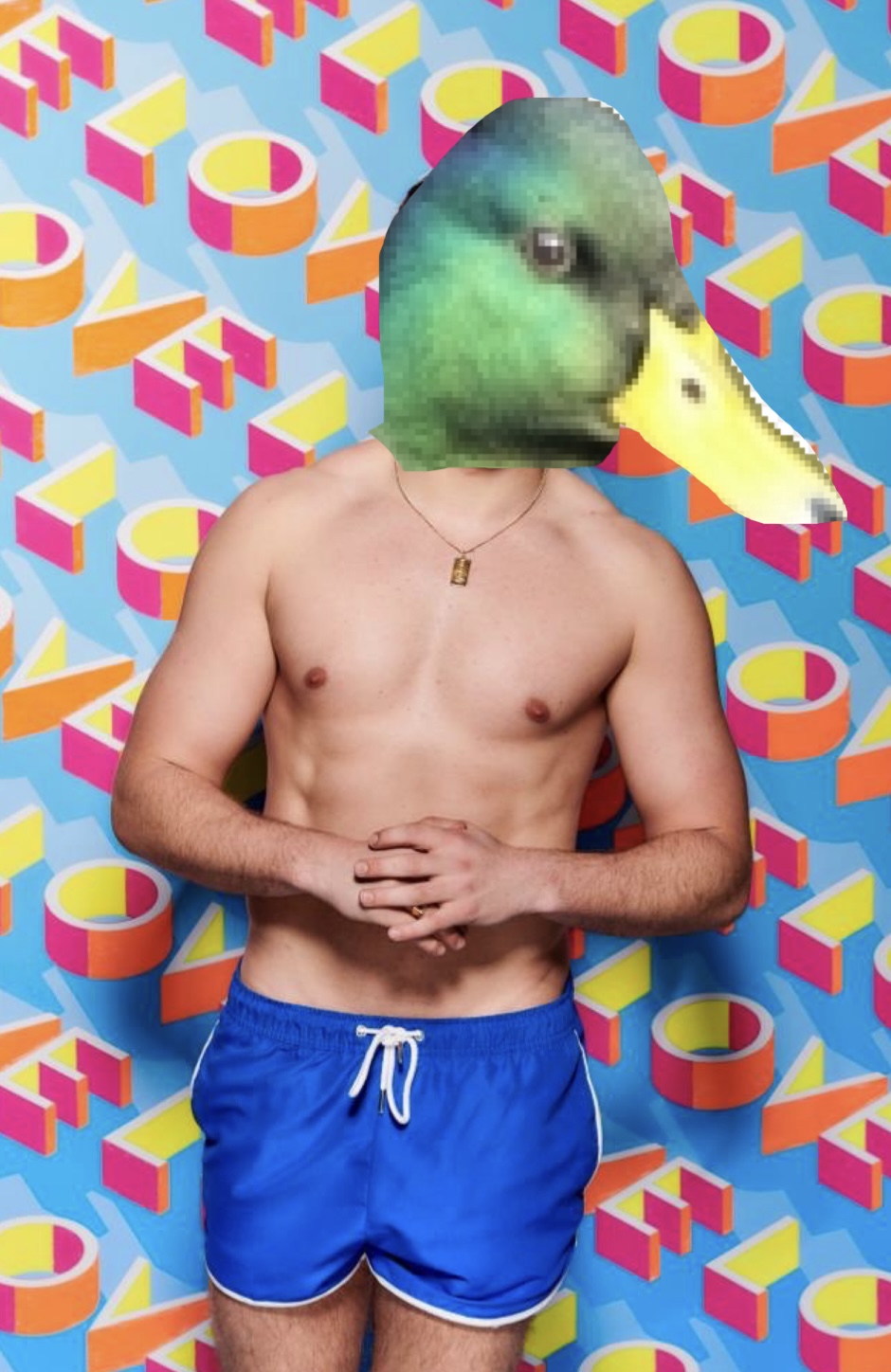
That time of year is upon us whereby you can segway from an hour of Springwatch to ITV2 for another hour of everyone’s hidden guilty pleasure: LOVE ISLAND. This isn’t high brow, Attenborough level content but it’s seemingly fascinating enough. The colourful courtship rituals of these so-called ‘influencers’ capture the attention of a nation for a whole summer but in the wider context of creatures on Earth, humans are quite dull. Birds on the other hand have a weird array of pulling techniques which got me thinking: which species of British bird would crack on with ease and who would be dumped from the island? There is no better group of animals to chirps their partners, trust me. It’s time for a metaphorical migration to Mallorca…
Wednesday, 1 June 2022
ESPAÑA ESCAPADE
¡HOLA
Thursday, 12 May 2022
8 WAYS TO TRIGGER A BIRDER
Ornithologists are an eclectic bunch. Often passionate, most of the time knowledgeable and proud of their undermined hobby. It’s not everyone’s cup of tea and not everyone can tell a wigeon from a pigeon. People get it wrong from time to time but birders, being the picky bunch they are, will clench their fists at any vague biological inaccuracy. It comes from a place of wanting to spread knowledge but it can also come across as snotty and sensitive.
Got a bird nuts friend who you want to wind up? Or are you a bird nerd simply needing something to rile you up? Look no further, here is your to-do list in how to truly trigger any birder.
Incorrectly label them a twitcher
An absolute classic to get us started. There is always argey-bargey between self-confessed ‘elite’ birders who speed across country for one sighting versus those who go out for the wider experience of nature. If you fall in the latter category, your nose will turn up at being labelled a twitcher. Logically, this distaste doesn’t make much sense unless you disagree with a slightly more dedicated approach to birdwatching. A twitcher can still be a birder but not everyone goes on a wild red/breasted goose chase. It’s more the bundling of two tribes under one umbrella that causes discomfort. Like calling a Canadian American. So close yet so far.
Refer to bird ‘houses’
This one really shouldn’t touch a nerve but quite simply, it does. Trust me. In a birders mind, the wooden structure by which a bird builds its best must be referred to as a BOX, not a HOUSE. No windows, no doors and no central heating. These objects couldn’t be further from houses. If there’s one thing that gets a bird nerd’s goat, it’s the personification of wildlife. Animals must remain scientific objects and not anything with a personality or emotions. The notion of a bird rocking up to a house indicates they’ll soon pop their kettle on and watch TV. A box is a far more truthful depiction of the situation and even though a house can generally be described as somewhere in which someone lives, it’s still somehow wrong.
Feed bread to a duck
You’re lucky you don’t get birders snatching the bread out of your hands before shoving it down your throat. The environmentally friendly mantra which you’d think everyone knows by now is still lost on many and it seriously gets birdwatchers blood boiling. Bread is readily available at home and wildfowl clearly enjoy eating it. In that sense, where’s the harm? Well, imagine if someone gave you unlimited Nando’s for the rest of your life. Your eyes will most certainly be bigger than your belly. I don’t need to go over why feeding ducks bread is a sucky thing to do but the idea of hundreds of birds scrambling all over each other’s faeces just to get a crust should be indicative.
Say the word seagull
He who must not be named. Friendships have been torn apart by this name. There are reports of some birders jumping out of windows in anger at even the uttering of the word. It is ornithological sacrilege. But what’s so bad about the word seagull? (I know, I’ve said it at least twice now). They’re gulls and they live mostly by the sea. There’s no harm in that, right? In the mind of a birder, it most certainly does. The family of birds are exclusively gulls with no room for this colloquialism. No matter how many times a nature boff will tell their friends or colleagues otherwise, this scandalous name with forever remain in the vocabulary of the wider public. But in the end, is that a bad thing? Is the term incorrect? Birders would love for everyone to specify species but that’s probably pedantic.
Refer to a moorhen as a duck
If it swims like a duck and hangs around with other ducks then it must be a duck. This is again a simple mistake for most people to make but if birders ruled the high court, it would be up there with treason. The same goes for coots who often get lumbered into this same categorisation. Most parks have information signs dotted around but alas, they’re just not that interesting. Who has time to decipher which birds are members of the rail family? If only corncrakes were more common, this may well help distance rails from ducks.The narrow bill and pointed toes may give it away but if they’re milling around the local pond, it’s an understandable oversight. A birder may well let you off with a warning.
Let your dog off a lead
In a world of already tense human-wildlife conflict, the fight for green spaces which can be used for recreation as opposed to conservation is a contentious one. Birders want to see every park fenced off and left to grow like a meadow whereas the other 99% of the population want a patch of grass so that their French bulldog can waddle around. There is no right answer but if you’re on a dog walk and your furry friend gallops off into a flock of birds or an area where nesting could happen, that’s generally not cool. Most nature reserves ban dogs and while most owners have a mutual respect with their pets, naturalists would rather it if dogs never needed to go for walkies ever again.
Get a fake lawn
Have you ever looked at your biodiversity rich garden filled with insects and wildflowers but thought - I wish this was like tupperware. For context, natural lawns are difficult to manage and not suitable for everyone, however if you’re plonking one in there for laziness on it’s own, that ought to get a few birders fighty. When natural habitats are being diminished, stripping a backyard of its last remaining ecosystem is a middle finger to wildlife. It was bad enough that likely a meadow or a forest was destroyed to make way for housing to start with but now there’s 0% nature to be seen. There’s enough plastic in the ocean already, don’t carpet it over where grass should be.
Ask them to ID a generic bird
‘I saw a bird the other day. It was between the size of a sparrow and a pigeon. I didn’t get a picture or a video or a sound of its call but it did have wings. What was it?’ Every birder has had this sort of question. The key is to be tested in terms of of an ID, trying to uncover any slight quirk that may give it away. If it looked glossy, a likely starling. If it’s song was punchy but the bird itself difficult to see, a probably wren. Obscurity doesn’t help a birder and whilst they’d love to be able to officially verify what was there, it’s guesswork if there’s nothing to go on. This shouldn’t upset most people but then again, birders are obsessive nerds that must be 100% correct about anything feathered.
If there are any other birders left reading this, let me know how awful you feel on a scale of 1 - 10. For any non-birders, you have plenty of ammunition to get you started. Enjoy annoying all of the ornithologists out there!
Adios…
Thursday, 28 April 2022
I am not a Wildlife Photographer
Yes, I have a camera. Yes, I take pictures of wildlife. Yes, you’re probably reading this because of seeing some of these pictures. However, I regret to inform you; I am not a wildlife photographer.
Here’s how I see it:
Firstly, to add a sprinkling of context, all of the pictures you see from my Instagram are mine. You don’t need to dust off your pitchfork and start a WhatsApp group chat entitled ‘Angry Mob’. I’m not claiming that my photos have been stolen from Google, everything you see has been shot from down one of my lenses. I’m so totally authentic, trust me.
I get this kind of comment a lot, most recently when I was out in the woods taking pictures of the bluebells. An elderly couple stopped me and said I ‘must be a professional’. I could’ve lied and created an elaborate facade but I was far too Britishly bashful. Their face when I admitted I was merely an amateur was like if I told my parents I was selling all my belongings and moving to Peru. Befuddled disappointment. Sorry guys, the truth is I’m a smuck with a camera. Random old people from the woods, I’ve let you down.
I’ve always been that annoying bird nerd and have always preferred to gaze out of a window rather than concentrating on something I probably should’ve been listening to. It was only until I was gifted a DSLR camera that I realised there’s a whole new avenue by which to appreciate the natural world. All of a sudden, instead of just loose memories, I had physical captures of individual moments. I could recall exactly what I’d seen as opposed to scraping the back of my mind. The photos were actually decent quality as well so in the early days, I’d take pictures of almost everything. Just because the camera did most of the work, I tricked myself into thinking I had acquired a skill. Far from it.
Having a camera and calling myself a photographer would be like if I called myself a chef for having an oven. For one, I don’t have the disposable income to actually improve any equipment I have. Forking out a grand in order to make my pictures ever so slightly clearer is not a sound investment. Sure, I’ll never be able to get the best photograph ever but I can always graft. After spending a lot of time around other birders, there’s sometimes a toxic one-up-man-ship about lenses. You whip out your 70-200 and someone else proudly protrudes their 150-600, with camo of course. To put it bluntly, it’s all about comparing each other’s sizes. Hilarious. The old phrase is of course that it doesn’t matter how big it is, it’s what you do with it.
I also have no idea about the technical side of photography. I’m sorry to confess this but aperture and ISO numbers mean about as much to me as Arabic. My camera has almost every setting under the sun but as long as it goes flashy flashy when I go clicky clicky, happy days. I even did a 6 month module at university about digital photography and even that frazzled me. Still got a 2:1 though didn’t I, cheeky. I can of course research about shutter speeds and file types but is that not just a bit dull if I want to go out and take pictures of pigeons? If anything, the fact that I can take half-decent photos with a minuscule understanding of the technicalities is testament to the hobby. Anyone can do it.
Time is also not on my side. I’d love to take a week off in order to track down capercaillies but my full time job and the requirement to have at least some money hampers that. I can just about manage a whole day of waiting for a kingfisher before my brain turns to mush and I lose a toe to frostbite. I went to see the BBC Wildlife Photographer of the Year exhibition a couple of years ago and that just filled me with jealousy. When I read the captions stating that some photographers waited for weeks just to get one shot, I felt a bit better about my badly croppped, hashed up snaps of a Woodchat shrike. My other option is to resign and take up photography as a career but then I’d need money for all the equipment. Catch 22.
If anything, that is the point I am trying to make. There are skilled professionals who are experts in their field and have grown businesses from photography. I’m just a weird guy with a camera. To compare myself with proper wildlife photographers would be like comparing Daniel Day Lewis with James Corden. The sucker punch is that photo envy is real. All those who take pictures of wildlife do it subconsciously though. We all look at extremely detailed or incredibly timed photographs and feel paled into insignificance compared to what we can muster. We feel as though we need to up our games and that our own photography is a grainy mess. Nonsense. There are always reasons why someone is slightly better than you and it’s probably for a reason out of your control. If it was in control, you’d be the best photographer in the world. I’m sure that if there’s such a thing as the world champion in wildlife photography, he too probably thinks his pictures stink.
In summary then, my goal has always been to try and educate my Instagram followers about wildlife and conservation, not to wow them with my awesome high quality pictures. If you’re a wildlife lover with a camera, just enjoy being out in the wild and capturing memories. No one needs to judge you, they are your experiences to cherish. Some of my posts are alright I suppose but they’re miles off being anywhere remotely professional. I reiterate my opening statement: I am not a wildlife photographer.